


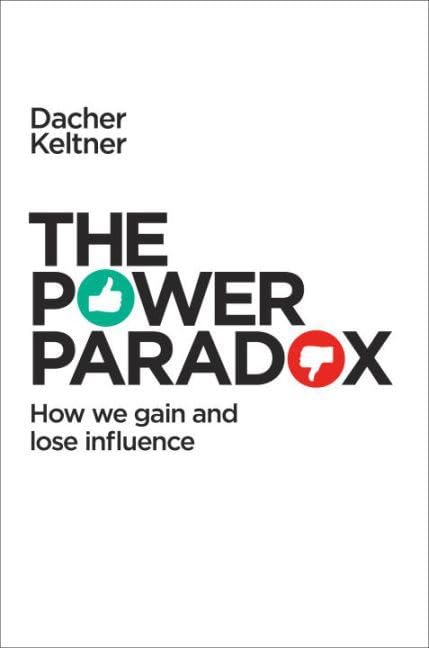
The power paradox : how we gain and lose influence / Dacher Keltner.
Publisher: New York : Penguin Press, 2016Copyright date: ©2016Description: 196 pages : illustrations ; 24 cmContent type:- text
- unmediated
- volume
- 9781594205248
- BF611 .K43 2016
 BOOKS
BOOKS
| Current library | Home library | Call number | Status | Barcode | |
|---|---|---|---|---|---|
| Alfaisal University On Shelf | Alfaisal University On Shelf | BF611 .K43 2016 (Browse shelf(Opens below)) | Available | AU0000000007014 |
Browsing Alfaisal University shelves, Shelving location: On Shelf Close shelf browser (Hides shelf browser)

|

|
|

|

|

|

|
||
| BF576 .C64 2015 Humans are underrated : | BF576 .H393 2017 HBR everyday emotional intelligence. | BF576 .H393 2017 HBR everyday emotional intelligence. | BF611 .K43 2016 The power paradox : | BF611 .M455 2014 Essentialism : | BF611 .S38 2016 The paradox of choice : | BF621 .R64 2019 Willful : |
Includes bibliographical references (pages 167-185) and index.
Power Is About Making A Difference In The World -- Power Is Given, Not Grabbed -- Enduring Power Comes From A Focus On Others -- The Abuses Of Power -- The Price Of Powerlessness -- A Fivefold Path To Power.
It is taken for granted that power corrupts. This is reinforced culturally by everything from Machiavelli to contemporary politics. But how do we get power? And how does it change our behavior? So often, in spite of our best intentions, we lose our hard-won power. Enduring power comes from empathy and giving. Above all, power is given to us by other people. This is what all-too-often we forget, and what Dr. Keltner sets straight. This is the crux of the power paradox: by fundamentally misunderstanding the behaviors that helped us to gain power in the first place we set ourselves up to fall from power. We can't retain power because we've never understood it correctly, until now. Power isn't the capacity to act in cruel and uncaring ways; it is the ability to do good for others, expressed in daily life, and itself a good a thing. Dr. Keltner lays out exactly--in twenty original "Power Principles"-- how to retain power, why power can be a demonstrably good thing, and the terrible consequences of letting those around us languish in powerlessness.