


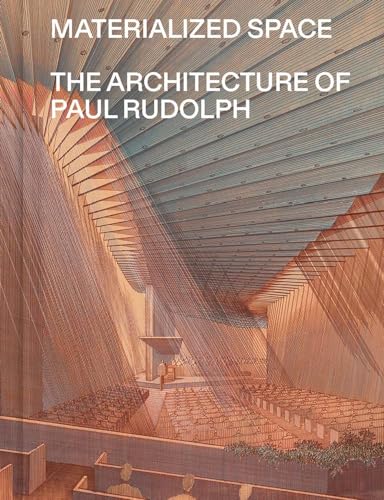
Materialized space the architecture of Paul Rudolph ; / Abraham Thomas.
Publisher: New York : The Metropolitan Museum of Art, 2024Description: 127 pages : illustrations (some color), portraits ; 27 cmContent type:- text
- still image
- unmediated
- volume
- 9781588397836
- Architecture of Paul Rudolph
- Rudolph, Paul, 1918-1997 -- Exhibitions
- Rudolph, Paul, 1918-1997
- 20th century
- Architecture -- United States -- History -- 20th century -- Exhibitions
- Architects -- United States -- Exhibitions
- Architecture -- âEtats-Unis -- Histoire -- 20e siáecle -- Expositions
- Architectes -- âEtats-Unis -- Expositions
- ARCHITECTURE / General
- Architecture
- History
- Architects
- United States
- NA737.R8 A4 2024
 BOOKS
BOOKS
| Current library | Home library | Call number | Status | Barcode | |
|---|---|---|---|---|---|
| Alfaisal University On Shelf | Alfaisal University On Shelf | NA737.R8 A4 2024 (Browse shelf(Opens below)) | Available | AU00000000020966 |
Published in conjunction with an exhibition of the same name on view at The Metropolitan Museum of Art, New York, from September 30, 2024, through March 16, 2025.
Includes bibliographical references (page 123) and index.
Directors' foreword -- Acknowledgments -- Introduction -- Modern houses -- Urban renewal -- Civic campus -- Megastructures -- Experimental interiors -- Projects in Asia -- Legacy -- Drawings and models -- Notes -- Selected bibliography -- Index -- Photograph credits.
A reassessment of the career of architect Paul Rudolph, from his modernist Sarasota houses to his Brutalist buildings and later international projects, featuring unpublished drawings, models, and furniture. Architect Paul Rudolph (1918-1997) was known for his modern houses and Brutalist buildings in exposed concrete, including the Yale Art and Architecture Building and the Boston Government Service Center. Rudolph's popularity peaked during the 1950s and '60s, when he served as the chair of Yale University's Department of Architecture, but his work fell from favor with the advent of postmodernism in the 1970s. Discussing Rudolph's work--from his beginnings in Sarasota, Florida, and his public and institutional buildings to mixed-use developments in Asia and plans for unrealized megastructures, including the Lower Manhattan Expressway--Abraham Thomas examines how Rudolph explored concepts such as functionalism, urbanism, and modular construction across decades and continents.